
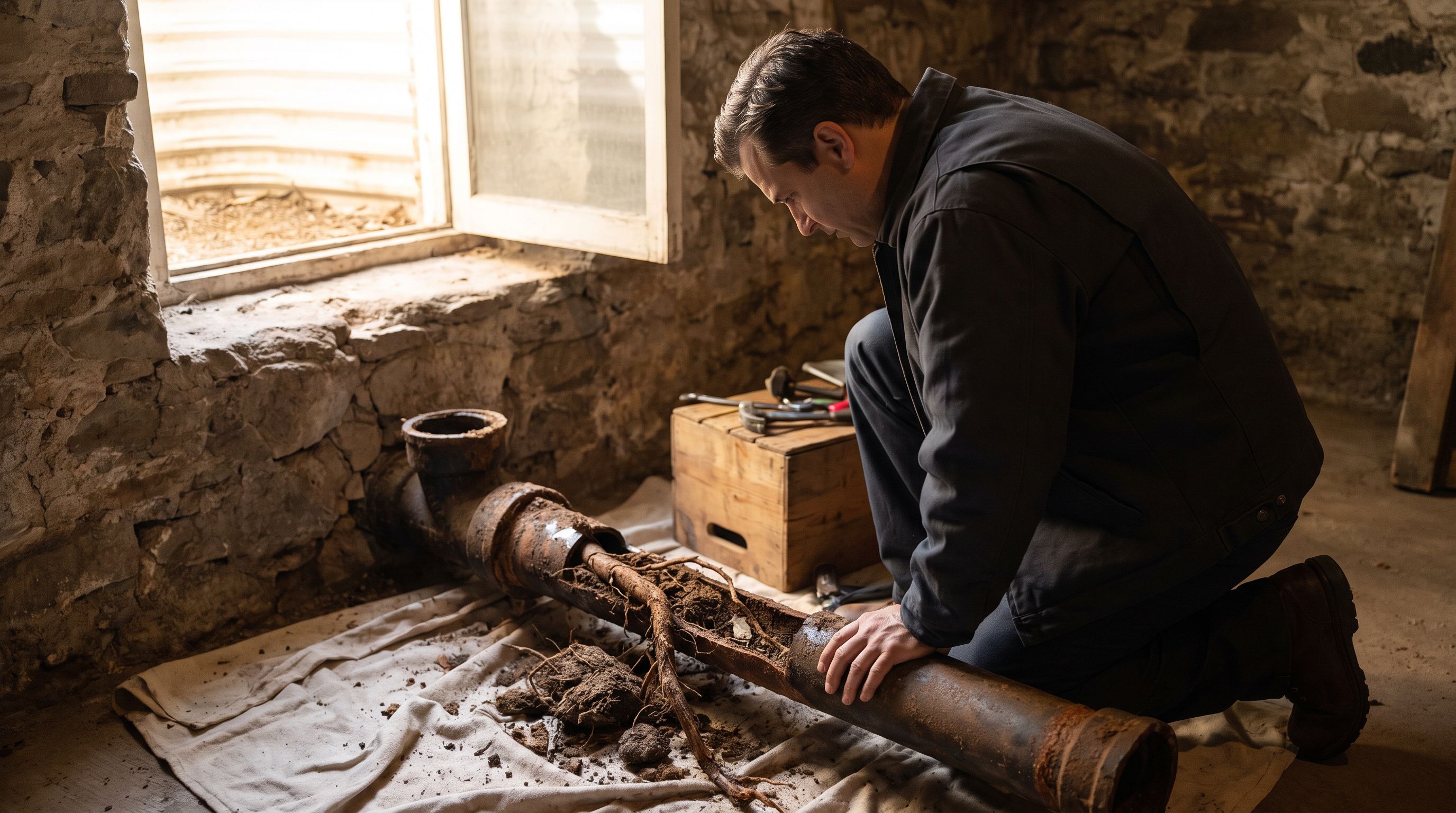
If a drain in your older Hollywood home clogs, gets cleared, and then clogs again a few months later, the clog itself is not the real problem. In most older South Florida houses the repeat offender is the condition of the drain line: corroded cast iron, a buried section that has lost its slope, roots in an old joint, or a vent that is not letting the system breathe. A cable snake punches through whatever is in the way, but it cannot smooth a rough pipe or re-level a sagging one, so the same spot catches debris again.
Homes built in South Florida before the 1980s typically have cast iron drain lines running under the slab and inside the walls. Cast iron rarely fails all at once. It rusts from the inside out, and that rust builds into rough ridges that narrow the pipe and snag anything passing through.
Once the interior of a line is rough, toilet paper, hair, lint, rice and coffee grounds stick where they would have washed straight through newer pipe. That is why a house can go three decades without trouble and then start clogging twice a year.
Drain lines rely on steady fall to carry solids out. Sandy soil shifts and settles, and over decades a buried run can sag into a low spot plumbers call a belly.
Water stands in the belly instead of flowing through it, solids drop out of suspension, and the blockage forms in the same place every time. Cable work does not change pipe slope, so the clog comes back on a schedule. A camera and a locator are the only reliable way to confirm a belly.
Older drain and sewer lines were assembled with hub and spigot joints packed with oakum and lead, and clay tile was common on the outside run toward the city main. Both weep a little as they age.
Roots follow that moisture, enter through the joint or a hairline crack, and keep growing inside the pipe where there is water and air. South Florida's year-round growing season means nothing slows them down seasonally. Cutting roots out is maintenance, not a repair, and they grow back.
Kitchen and laundry branches clog for a different reason. Warm grease goes down liquid and cools into a shell on the pipe wall, and soap scum plus hard water scale do the same thing in shower and washer lines.
In an older home with already-rough cast iron, that shell has plenty to hold onto. This is also the one cause you can genuinely slow down from inside the house:
Every drain needs air behind the water to flow freely. If a roof vent is blocked by debris or a nest, or an old vent was undersized to begin with, fixtures drain slowly and gurgle even when the pipe below is clear.
Homeowners read that as a clog and call for a snake. The drain improves briefly, then goes slow again, because the restriction was never in the pipe.
| What you notice | Most likely cause | What settles it |
|---|---|---|
| One drain clogs every few months | Rough cast iron or a belly in that branch | Camera inspection, then spot repair |
| Every fixture in the house is slow | Restriction or roots in the main line | Clear through the cleanout, then camera |
| Toilet gurgles when the washer drains | Partial main blockage or a vent issue | Main line check plus vent inspection |
| Kitchen sink only, with standing water | Grease and soap shell in the kitchen branch | Full-length cleaning of that branch |
| Odor and backups worse after heavy rain | Groundwater entering a cracked line | Camera inspection for cracks and infiltration |
Hollywood has a lot of long-standing single-family housing built on slab, and slab construction means the drain lines sit under concrete where nobody inspects them until something backs up. Add mature landscaping, sandy soil and a high water table, and you have the conditions that turn a one-time clog into a pattern.
The rainy season makes it obvious. Saturated ground and groundwater working into a compromised line eat into whatever capacity the pipe has left, so the drain that was merely slow in March backs up in August. Our plumbing services in Hollywood deal with this housing stock regularly, and we cover Pembroke Pines, Miramar, Southwest Ranches, Weston, West Park and Hallandale Beach the same way.
Taft Plumbing Services is a locally owned plumbing company on Taft Street in Hollywood, our plumbers are licensed and insured, and we keep pricing upfront with no hidden fees. If a drain in your home keeps clogging, drain cleaning is the right first step, and if it has already backed up, ask about emergency plumbing.
Call (954) 288-1485 or send the service request form on our homepage and tell us how often the drain is clogging. That pattern is the single most useful thing you can hand a plumber.
A cable clears a path through the blockage but leaves the pipe condition unchanged. If the line is rough with corrosion, sagging into a low spot, or holding roots, debris starts collecting in the same place immediately and you are back where you started within months.
Not always. Plenty of cast iron is still serviceable and only needs thorough cleaning. A camera inspection is what separates a pipe that is simply dirty from one that is scaled, cracked or sagging badly enough to justify repair or replacement of a section.
Yes, and it is common in older homes. Roots follow the moisture seeping from aging hub joints or hairline cracks, then grow inside the pipe where water and air are available. With a year-round growing season here, cut roots return rather than staying dormant through a winter.
It often does. Saturated ground and a high water table let groundwater enter a cracked or open-jointed line, which uses up capacity the pipe needed for your household flow. A line that was borderline in the dry months starts backing up once the rain sets in.
Have the line cleared and then inspected with a camera in the same visit, while the pipe is open and visible. That combination shows the actual cause and its location, so the next decision is based on the pipe's condition instead of guesswork.